
As international travel continues to surge in 2026, the complexity of crossing borders has shifted from physical queues to digital portals. For the modern traveler, understanding the nuances of Visa vs e-Visa and Visa on Arrival is no longer just a logistical detail—it is the foundation of a successful itinerary. Whether you are heading to the ancient temples of Southeast Asia or the business hubs of the Middle East, choosing the right entry method can save you hours of frustration and unexpected costs.
This guide provides a comprehensive breakdown of these three entry systems and a step-by-step look at the modern eVisa application process to ensure your next journey is seamless.
Breaking Down the Options: Visa vs e-Visa and Visa on Arrival
While all three documents serve the same purpose—granting you legal entry into a foreign country—their costs, processing times, and convenience levels vary significantly.
1. The Standard Consular Visa
Often referred to as a “sticker visa,” this is the traditional method. You must visit an embassy or consulate, submit your physical passport, and wait for it to be returned with a stamped page.
- Best For: Long-term stays, work permits, or countries that have not yet digitized their immigration systems.
- Cons: Time-consuming and requires physical travel to a diplomatic mission.
2. The Visa on Arrival (VoA)
The VoA is a favorite for spontaneous travelers. You simply board your flight and handle the paperwork at a designated kiosk upon landing.
- Pros: Ideal for last-minute trips where there is no time for pre-approval.
- Cons: You are at the mercy of airport queues. In busy hubs like Cairo or Bangkok, waiting for a VoA can add two hours to your travel day. Furthermore, you must often carry exact cash in specific currencies (like USD or Euros).
3. The Electronic Visa (e-Visa)
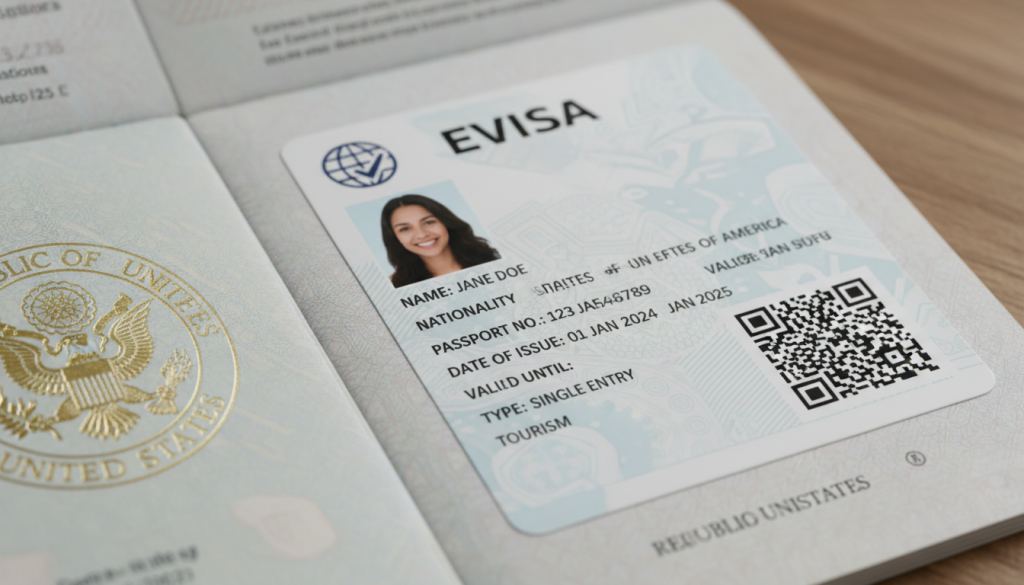
The e-Visa represents the gold standard for 2026 travel. It is a digital authorization linked to your passport number that you obtain before leaving home.
- Pros: It offers the ultimate peace of mind. You bypass the bank kiosks and long queues, heading straight to the immigration officer.
- Cons: Requires internet access and a few days of lead time for processing.
Mastering the eVisa Application Process
If you have chosen the digital route, the eVisa application process is generally straightforward, provided you have your documentation in order. To ensure a “first-time” approval, follow these professional steps:
- Select the Official Portal: Always ensure you are on the government-hosted domain. Many third-party sites look official but charge excessive service fees.
- Digital Documentation: Most systems require a high-resolution scan of your passport’s bio-data page and a professional-style digital photo. Ensure the “MRZ” (machine-readable zone) at the bottom of your passport is clearly visible.
- Accuracy in Data Entry: Double-check your passport number and name spelling. A single character error can lead to a “Denial of Boarding” at the airport.
- Payment and Confirmation: Once the fee is paid, save your application reference number. Most approvals are delivered via email as a PDF.
Why the e-Visa is Winning the “Visa vs e-Visa” Debate
In the current travel climate, the debate over Visa vs e-Visa and Visa on Arrival is increasingly leaning toward the electronic option. Governments prefer it because it allows for pre-screening of passengers, and travelers prefer it because it eliminates the uncertainty of being rejected at the border after a 12-hour flight.
Conclusion: Preparation is the Key to Luxury
Travel is a luxury, and nothing spoils it faster than administrative hurdles. By understanding the eVisa application process and choosing the pre-approved digital path over the unpredictable “on arrival” queue, you reclaim control over your time. Secure your authorization early, print a physical backup, and step into your next destination with total confidence.
